Customers struggle to match frame, mechanism, protocol and mounting type. A standard product grid weakens material perception and does not help specifiers.
Independent case study03 / 07Self-initiated concept
Premium e-commerce
ЛАДОНЬ 220
A tactile catalogue and configurator for architectural electricals.
 Working frontend prototype
Project in brief
I combined an editorial material presentation with compatibility checks and complete-kit assembly.01
Project context
Private buyers, interior designers and project specifiers.
My goal was to preserve a premium material experience while removing incompatible purchases.
Concept scope
These are prototype parameters and coverage, not business results.5configuration dimensions
B2C / PROtwo journeys
1 kitselection outcome
02
Three key decisions
Each decision connects the product need, human behaviour and interface form.
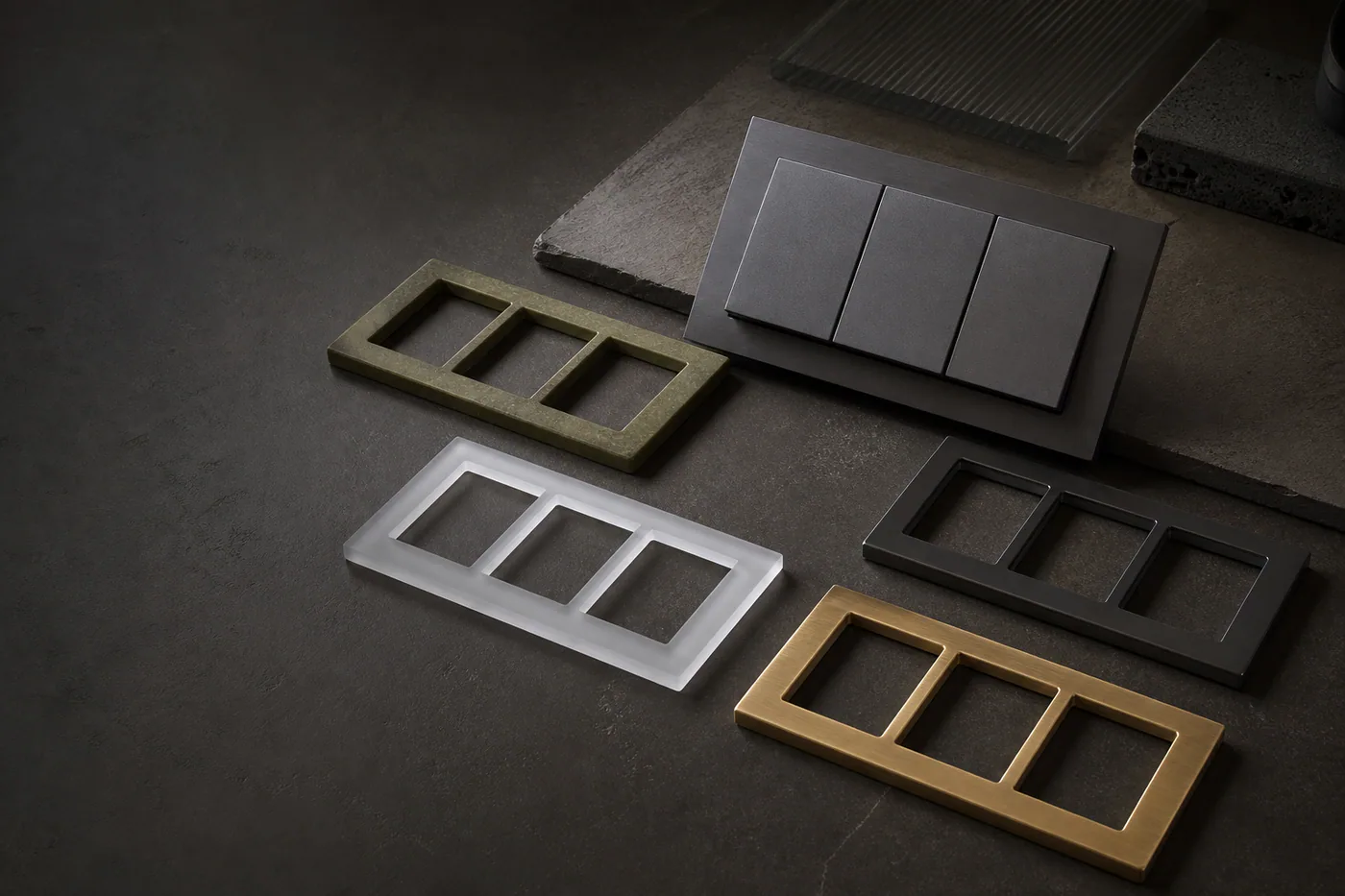
Material in close-up
I show texture and reflection before technical data, so selection begins with the object.
A kit instead of SKUs
The configurator combines frame, key and mechanism into one validated item.
A designer mode
The project flow stores rooms, repeated kits and a future specification structure.
03
What I built
Every capability is labelled clearly: what works in the browser and what remains a designed proposal.
01Faceted catalogueWorking prototype
02Kit configuratorWorking prototype
03Compatibility checkWorking prototype
04Stock, delivery and exportDesigned proposal
04
Working artefacts
Not decorative screens, but the logic supporting the product journey.
SKU model
Compatibility rules
Project-purchase flow
Limitations
What to know before opening the demo
The concept is not connected to a live assortment, inventory, payment or delivery. Textures and prices are demonstration data.
05 / Interactive prototype
Open prototype↗Open interactive prototype
Explore the core journey and interface behaviour. This is a demonstration build - entered data is not submitted anywhere.
Next case study
04ТиходальBooking service→